Explanation:
Correct Answer: B — Silver tables contain cleansed and conformed data derived from Bronze tables
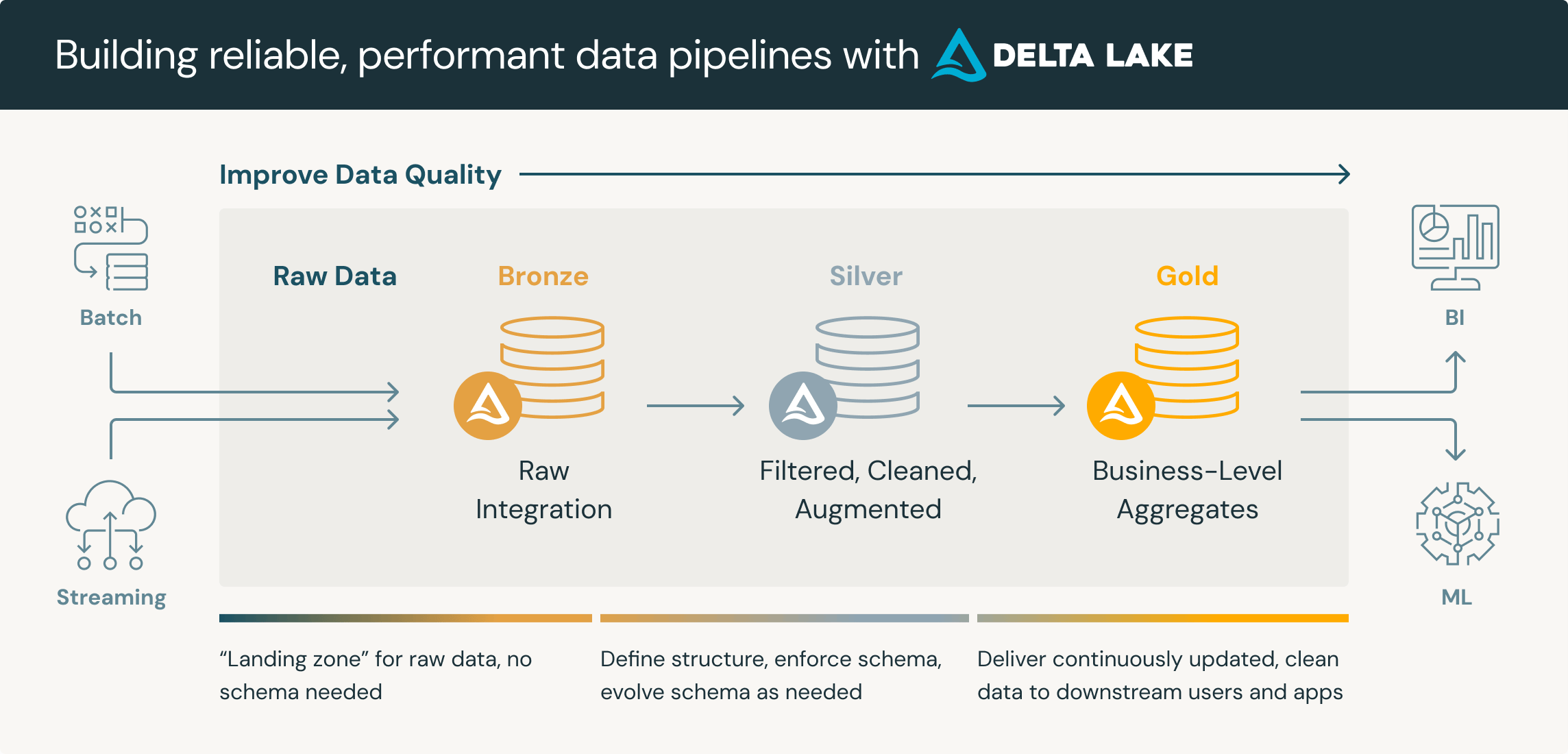
Silver tables represent the “just‑enough” cleaned and conformed version of data ingested into Bronze tables. According to Databricks, the Silver layer applies minimal transformations such as deduplication, standardization, conforming schemas, and enriching data to create an enterprise view of key business entities. This makes Silver data suitable for analytics and further downstream processing while preserving flexibility.
A: Incorrect. Aggregation is not required in the Silver layer and is typically handled in the Gold layer.
C: Incorrect. Silver tables may have more or fewer records than Bronze due to deduplication, joins, or enrichment.
D: Incorrect. Full business logic and reporting‑ready transformations belong to the Gold layer, not Silver.
When you see “always true”, choose definitions that match official Databricks wording, not assumptions about data volume or aggregation.
Reference: https://www.databricks.com/glossary/medallion-architecture
In Databricks, data engineering practices often involve structuring data into different layers or tables to ensure data quality, performance, and manageability. These layers are commonly referred to as Bronze, Silver, and Gold tables.
Which statement regarding the relationship between Silver tables and Bronze tables in Databricks is always true?
A
Silver tables contain a less refined, less clean view of data than Bronze data.
B
Silver tables contain cleansed and conformed data derived from Bronze tables
C
Silver tables contain more data than Bronze tables.
D
Silver tables contain less data than Bronze tables.