
Explanation:
For a Type 3 SCD implementation in Azure Synapse Analytics dedicated SQL pool, the goal is to track both current and previous values of a changing attribute (in this case, product category) within the same row, rather than creating new rows as in Type 2.
B. [CurrentProductCategory] [nvarchar] (100) NOT NULL
E. [OriginalProductCategory] [nvarchar] (100) NOT NULL
Type 3 SCD Pattern: Type 3 dimensions maintain both original and current values in the same row, which is exactly what B and E accomplish.
Data Integrity: Both columns use NOT NULL constraints, ensuring complete data for both historical and current states.
Clear Naming: The column names explicitly indicate their purpose (Current vs Original), making the schema self-documenting.
A. [EffectiveStartDate] [datetime] NOT NULL
C. [EffectiveEndDate] [datetime] NULL
D. [ProductCategory] [nvarchar] (100) NOT NULL
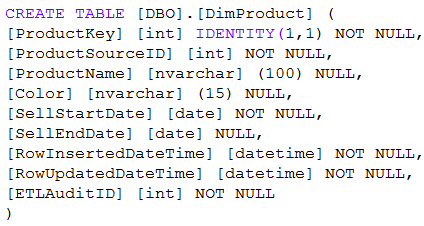
You are implementing a Type 3 slowly changing dimension (SCD) for product category data in an Azure Synapse Analytics dedicated SQL pool. You have a table created with the following Transact-SQL statement:
CREATE TABLE dbo.DimProduct(
    ProductKey int NOT NULL,
    ProductAlternateKey nvarchar(25) NULL,
    EnglishProductName nvarchar(50) NOT NULL,
    Category nvarchar(50) NOT NULL
)
CREATE TABLE dbo.DimProduct(
    ProductKey int NOT NULL,
    ProductAlternateKey nvarchar(25) NULL,
    EnglishProductName nvarchar(50) NOT NULL,
    Category nvarchar(50) NOT NULL
)
Which two columns should you add to the table? Each correct answer presents part of the solution. NOTE: Each correct selection is worth one point.
A
[EffectiveStartDate] [datetime] NOT NULL,
B
[CurrentProductCategory] [nvarchar] (100) NOT NULL,
C
[EffectiveEndDate] [datetime] NULL,
D
[ProductCategory] [nvarchar] (100) NOT NULL,
E
[OriginalProductCategory] [nvarchar] (100) NOT NULL,
No comments yet.